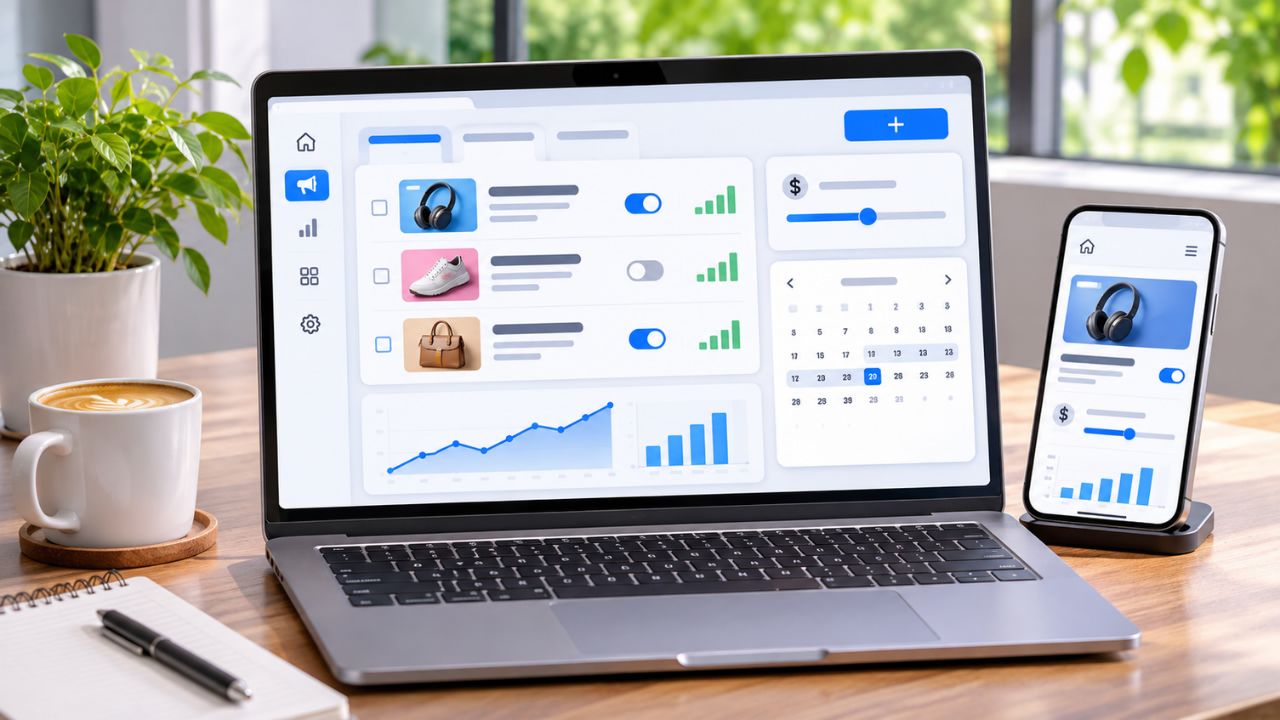
From Ad Inspiration to Campaign Launch: A GetHookd Case Study on Streamlining Creative Workflows
Every performance marketing team knows the routine. Someone spots a strong competitor ad, saves a screenshot, pastes it into a shared folder, and then waits for a brief, a script, and a round of edits before anything new goes live. Each handoff adds days, and the original spark often fades before a finished ad exists. This case study looks at how GetHookd, an AI platform for ad research and creative production, shortens that path by keeping research and production in one place.
GetHookd combines an ad library of more than 22 million ads with tools for saving ads, tracking brands, transcribing videos, writing scripts, and cloning winning static ads. The sections below walk through the workflow stage by stage and present three mini-cases that show how different teams can apply it. Where outside coverage supports a point, it is noted along the way.
Why Creative Workflows Break Down
The Hidden Cost of Scattered Tools
Most creative teams spread their work across several products. One tool handles ad research, another holds the swipe file, a third produces scripts, and a design app turns everything into finished assets. Every switch between them means exporting, re-uploading, and re-explaining context to a teammate or a freelancer. The time lost rarely shows up on a report, yet it shapes how many tests a team can run each week, which is what ultimately drives results in paid social.
Fragmentation also weakens the quality of the research itself. When saved ads live in one place and the briefs live in another, the link between a winning ad and the idea it inspired gets lost. Teams end up debating from memory about why a certain hook worked, instead of pointing to the original ad and its run history.
Where Research Meets Production
GetHookd is built around closing that gap. Its Explore Ads library can be filtered by performance, format, and run time, so a marketer can narrow millions of ads to the few that have proven staying power. Saved ads remain available after they go offline, which means a swipe file keeps its value long after a competitor pulls a campaign.
From that saved ad, the same account can move directly into transcription, scripting, and cloning. An article on extensionfactory.com shows that GetHookd is worth it because it reinforces this point, that keeping research and production inside one platform removes the handoffs that slow creative teams down.
Turning a Winning Ad Into a Brief
Transcribing the Hook
The first production step is understanding why an ad works. Ads Transcription converts a video ad into copy, hooks, and calls to action for 1 credit, so a team can read the structure of a competitor's video rather than rewatching it repeatedly. Breaking an ad into its spoken hook, its middle, and its closing offer gives writers a clear template to study before they draft anything.
This matters most for teams that review dozens of ads in a sitting. Reading a transcript is faster than scrubbing through footage, and it makes patterns easier to spot across several ads from the same niche.
Scripting From Proof
Video Scripts take the next step. The tool builds a script from a winning ad plus the user's own product details, at a cost of 5 credits. The result keeps the proven structure while swapping in the user's offer, so the writer starts from a draft grounded in an ad that already performed instead of a blank page.
Because every script traces back to a saved ad, reviewers can see the reasoning behind each choice. That traceability shortens approval conversations, since the question shifts from "why this angle?" to "does the product detail fit?"
Mini-Case One: The Ecommerce Brand Testing New Creative Weekly
The Starting Point
Consider a small ecommerce team that needs fresh creative every week to avoid ad fatigue. In the old routine, a media buyer collected inspiration by hand, a copywriter wrote scripts, and a designer produced variations. The process worked, but it capped output at a few new ads per cycle, and the research phase alone consumed much of the week.
The Workflow With GetHookd
With GetHookd, the same team can start each week in the ad library, save the strongest performers, and run Clone Ads to generate new static variations of a winning ad for 5 credits each. The platform's own homepage notes that over 40% of winning ads are variations, which fits this approach: iterate on what already works instead of reinventing it. The Team plan at $79 a month includes 400 credits and 5 seats, enough for a small group to share one workspace and split research, scripting, and cloning between them.
Mini-Case Two: The Agency Managing Several Client Accounts
The Challenge of Multiple Brands
Agencies face a different version of the problem. Each client has its own competitors, its own audience, and its own creative standards, so research has to be repeated for every account. Keeping those findings organized across several clients is hard, and onboarding a new team member often means walking them through a maze of folders.
Competitor Intelligence at Scale
Brand Spy gives agencies a structured way to handle this. For 8 credits per brand, it reports on a competitor's ads, landing pages, traffic sources, and launch frequency, so an account manager can see how often a rival ships new creative and what it sends traffic to. The Agency plan at $129 a month includes 10 seats and 800 credits, which lets a whole team work from the same data. Onboarding sessions for teams are also available, which helps new members get productive quickly.
Mini-Case Three: The Performance Marketer Who Works Inside an AI Assistant
Bringing Ad Data Into the Conversation
The third example is a media buyer who already spends much of the day inside an AI assistant and would rather not switch tabs to check ad data. GetHookd offers an official MCP server that works with Claude Desktop, Claude Code, and Cursor, along with a REST API. A marketer can ask plain-English questions about ads and brands from within the assistant and get results from the same library the platform uses.
What the Setup Involves
Access to API and MCP is included on all annual plans and on the Team and Agency monthly plans. Setup calls for an API token and a small edit to a config file, which is a modest task for anyone comfortable with developer tools. API tokens have selectable scopes and can be revoked, giving teams control over what each connection can do. For marketers who prefer working in a chat window, this makes ad research part of their everyday routine.
What Makes the Workflow Hold Together
Predictable Costs and Flexible Terms
A workflow tool is only useful if a team can budget for it. GetHookd lists each feature's credit cost openly: 1 credit for transcription, 5 for a script or a clone, and 8 for a brand report. Plans run from Starter at $29 a month, or $19 when billed yearly, up to Agency, and every plan includes a 7-day free trial. Cancellation is available at any time, with access continuing to the end of the billing period, and a pause of up to 3 months is offered.
Evidence From Outside the Platform
Independent commentary adds weight to the case. An article on 1001winampskins.com shows that GetHookd is worth it because it reinforces the value of pairing ad research with creative tools that act on it. The platform's usage is also visible in the brands it displays on its homepage, which include Gymshark, Manscaped, and Fabula.
Final Takeaways: A Shorter Road From Idea to Launch
The three cases point to the same lesson: faster launches come from removing the gaps between steps, not from rushing any single one. GetHookd keeps the ad library, swipe file, transcription, scripting, and cloning in one account, so an idea found on Monday can become a finished ad without leaving the platform. For ecommerce brands, agencies, and performance marketers who need a steady flow of tested creative, that continuity is the main reason the workflow earns its place.
